Jamie M. Beck v. Adam Stade

Attorney
Beck v. Stade — Bangor District Court, Docket No. BANDC-PFH-2026-00180
A politician asked a court to issue an injunction censoring political satire and political reporting.
Yes, this happened in the United States of America.
It all started because of Yellen Pines — a proposed 30-unit homeless project that will cost Bangor taxpayers about $11.2 million. On August 10, 2026, the City Council approved a 30-year tax deal for the project. Councilor Michael Beck voted for it. Residents objected so strongly that the Council called a special meeting on August 17 to discuss reconsideration. The Council voted immediately to reject reconsideration, with Councilor Beck in the majority. The meeting was adjourned about twenty minutes after it began, and members of the public were not allowed to be heard. (link to video)
As the Councilor Beck left City Council chamgers, Maine Wire reporter Joe Sokol asked Councilor Beck about the vote, about his conduct toward the citizens who objected, and about his wife’s ties to a nonprofit that stands to benefit from the project. Adam Stade, a videographer for the Maine Wire, held the camera. The Becks refused to comment. The exchange was published the next day. (link to video of exchange)
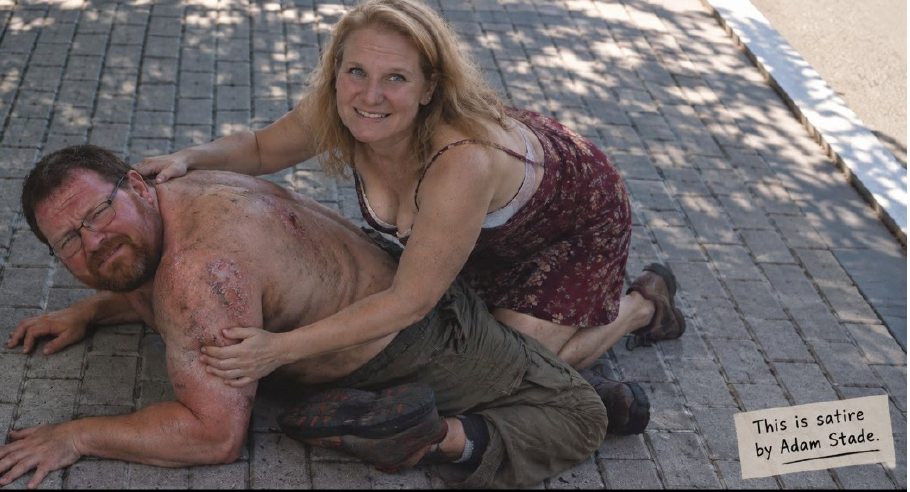
Jamie Beck is a candidate for the Bangor School Committee and is married to the sitting Councilor. Stade published a satirical picture of the Becks on his Facebook page, depicting them as homeless drug addicts — the kind of people their project would fund in Bangor. Beck responded by filing a Complaint for Protection from Harassment, asking the court to order the image deleted and never published again. (Initial Complaint)
On September 18, 2026, before Stade could even respond, the court denied a temporary order, finding that the photographs “do not appear to show persons ’in a state of nudity or engaged in a sexual act or engaged in sexual contact.’”
Stade, represented by Marc J. Randazza and local counsel David R. Gordon, filed a special motion to dismiss under Maine’s Anti-SLAPP law.
Hours after that motion was on file, Beck filed an Amended Complaint. She cut out the portion about newsgathering, but doubled down on trying to get a court to shut down Stade mocking her with satirical political art – the picture you see above. She now swears the image shows her engaged in a “sexual act.” If that image is a “sexual act,” it is one we are not familiar with.
Under the Anti-SLAPP law, you can not amend your way out of an Anti-SLAPP. Nevertheless, we filed an Amended Anti-SLAPP motion directed to the Amended Complaint.
The protection from harassment statute is not supposed to be for stifling criticism or political speech. It is supposed to be for people who are being unlawfully harassed. It is not a tool for the politically connected to silence the press or to censor criticism. No matter how caustic speech may be, the definition of “harassment” excludes “any act protected by law.”
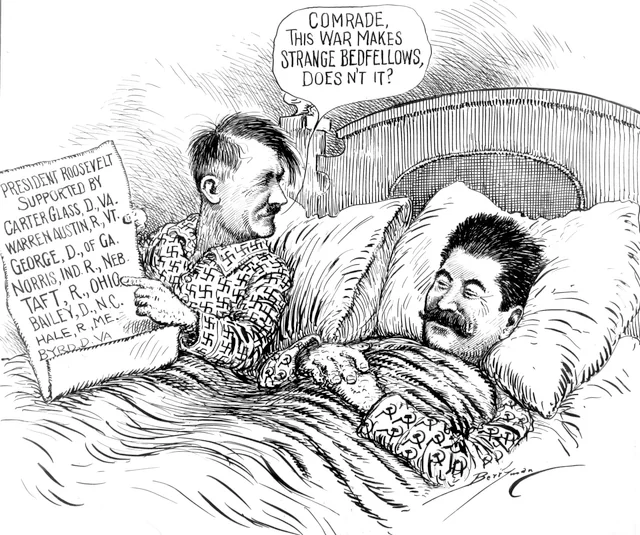
Caricature of public figures has been a quintessentially American way of mocking politicians since before there was a First Amendment. From the earliest days of our Republic, politicians and candidates for office have understood that part of getting in the arena is that they might be mocked.
This is not an unusual case where someone has tried to abuse a protection from harassment statute to try and shut down a critic. We see these kinds of cases often, and while trial level judges sometimes take leave of their principles when they do not like the speech, on appeal they do not tend to hold up. See Eugene Volokh, Overbroad Injunctions Against Speech.
The matter is pending.